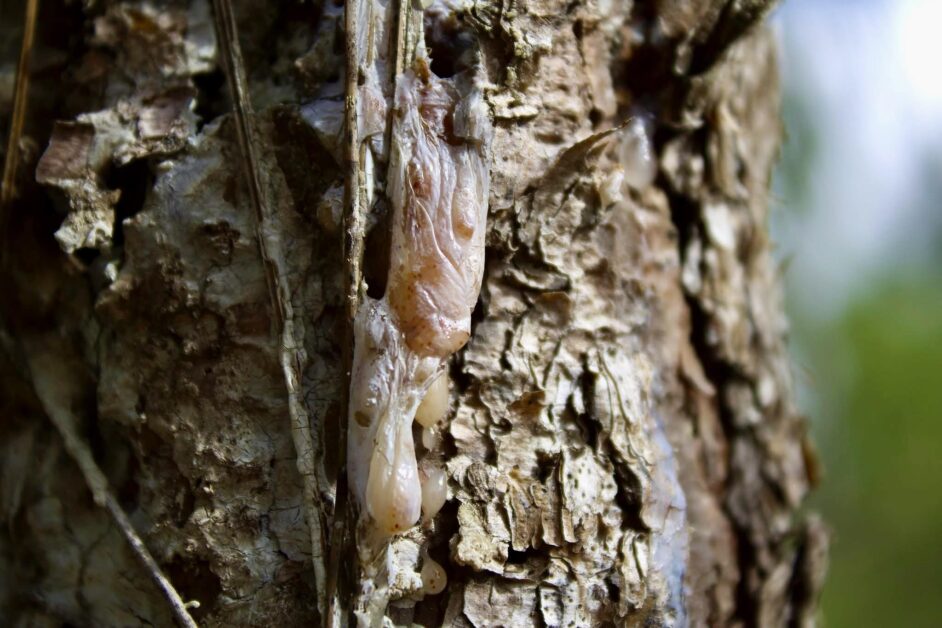
Pine pitch has been valued for centuries across many cultures. Here are some of the best uses:
Waterproofing & Sealing
Pine pitch is a natural sealant. Historically it was used to caulk wooden boats and barrels, and it still works great for waterproofing seams on canvas, leather, and wood.
Fire Starting
Pitch is highly flammable and one of the best natural fire starters available. Pitch-soaked wood (called “fatwood”) burns hot and long, even in wet conditions. A small chunk can get a campfire going quickly.
Adhesive
Mixed with charcoal powder or beeswax, pine pitch makes a strong, traditional adhesive. It was used to haft arrowheads and stone tools for thousands of years and still works well for bushcraft and woodworking repairs.
Wound Salve & Antiseptic
Pine pitch has natural antimicrobial properties. Applied to cuts, scrapes, or splinters, it can draw out infection, protect the wound, and promote healing. Many traditional cultures used it medicinally, and modern herbalists still do.
Removing Splinters
Warm pitch applied over a splinter and allowed to harden pulls the splinter out when peeled off — similar to a wax strip.
Wood Finish & Preservation
Thinned with a solvent like turpentine (which is itself distilled from pine resin), pitch can be used as a protective finish or preservative for wood, including tool handles and fence posts.
Incense & Aromatherapy
Burning pine pitch produces a pleasant, resinous aroma and has been used ceremonially and therapeutically across many cultures.
Lamp Fuel
Pine pitch can fuel small oil-style lamps, burning steadily with a warm light — a traditional use going back to ancient times.
The main trick with pine pitch is harvesting and working with it while warm, since it becomes brittle when cold. Gentle heat (like a warm pan or campfire edge) keeps it pliable and workable.